
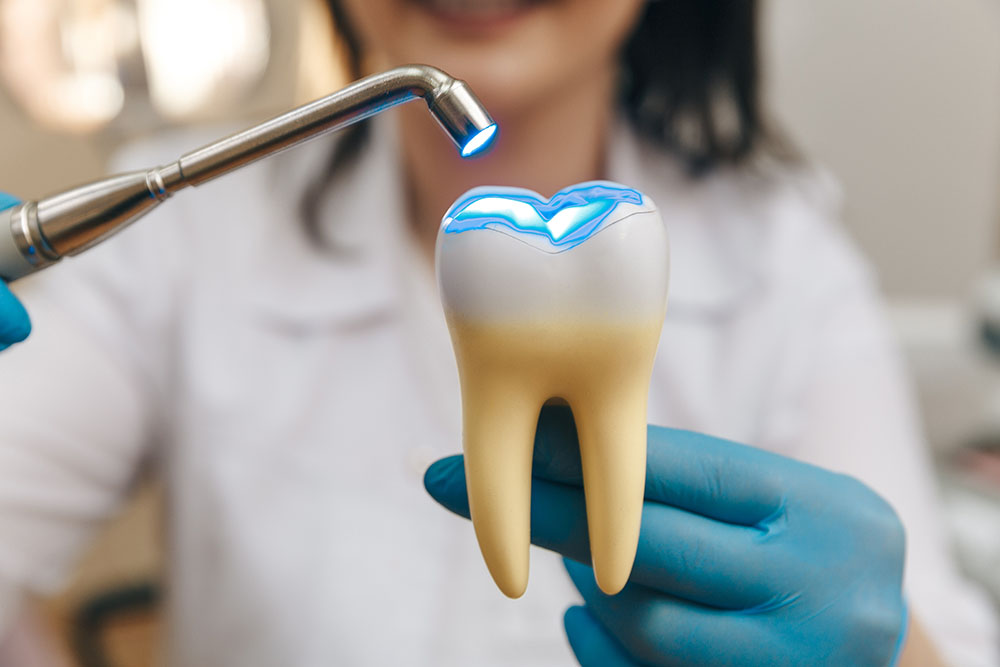
Do you have a cavity, tooth sensitivity, or a filling that has broken or fallen out? A dental filling, also known as a dental restoration, can restore a tooth that has been damaged by decay, wear, or minor fractures.
At Dental One, a dental clinic located in Costa del Este, Panama, we evaluate each case to determine how much of the tooth has been affected and which type of restoration is most appropriate to restore function, protect the tooth, and maintain a natural-looking appearance.
What Is a Dental Filling?
A dental filling is a restoration used to repair an area of a tooth that has been damaged, most commonly by tooth decay.
In Panama, Spanish-speaking patients often refer to dental fillings as calzas dentales. You may also hear terms such as dental restoration, cavity filling, composite filling, or resin filling.
In simple terms, the procedure involves removing the damaged or decayed portion of the tooth and rebuilding the area with a restorative material.
When a tooth-colored material such as composite resin is used, the restoration may also be referred to as a tooth-colored filling, white filling, composite filling, or resin filling.
The goal is not simply to “fill a hole.” A properly indicated dental restoration is designed to restore the tooth’s shape and function so you can bite and chew comfortably.
What Causes Dental Cavities?
Cavities are not caused solely by poor oral hygiene.
Tooth decay develops gradually when plaque accumulates on the teeth and bacteria convert sugars from foods and beverages into acids that can weaken and damage tooth structure.
Factors such as frequent consumption of sugary foods and drinks, inadequate plaque removal, fluoride exposure, and oral hygiene habits can all influence a person’s risk of developing cavities.
It is also important to know that a cavity may develop without causing noticeable pain, especially in its early stages. Regular dental checkups can help detect tooth decay before it progresses into deeper areas of the tooth.
How Do You Know If You Need a Dental Filling?
Not every cavity causes symptoms in its early stages. However, certain signs may indicate that you should schedule a dental evaluation.
Tooth Sensitivity
You may notice discomfort when consuming cold, hot, or sweet foods and beverages.
Pain When Chewing
A tooth that begins to hurt when you bite down or apply pressure should be evaluated to determine the cause.
A Visible Hole or Change in the Tooth
In some cases, you may notice a small cavity, irregular area, dark spot, or other visible change in the tooth.
Food Frequently Gets Stuck Between Your Teeth
If food repeatedly becomes trapped in a particular area between two teeth, there may be a change in the shape or integrity of the tooth that should be examined.
An Existing Filling Has Broken or Fallen Out
Dental fillings do not necessarily last forever. Normal wear, chewing forces, fractures, or new decay around an existing restoration may eventually require the filling to be repaired or replaced.
If you experience any of these symptoms, the first step is to identify the cause. Not every toothache means you need a filling.
Tooth-Colored and Composite Resin Fillings
Composite resin is commonly used for direct dental restorations because the material can be selected in a shade that closely matches the natural color of the tooth.
This allows the dentist to rebuild the affected portion of the tooth while helping the restoration blend naturally with your smile.
Depending on the individual case, composite resin restorations may be used to treat cavities and rebuild certain damaged areas of a tooth.
The appropriate material and treatment should be selected by your dentist after evaluating factors such as the location and extent of the damage, the amount of healthy tooth structure remaining, and the forces placed on the tooth when you bite and chew.
How Is a Dental Filling Done?
Although every patient’s situation is different, a dental filling procedure generally involves several steps.
1. Dental Evaluation
The dentist examines the affected tooth and determines the extent of the damage. In some cases, X-rays may be recommended to obtain additional information.
2. Removal of Decayed Tooth Structure
The damaged or decayed portion of the tooth is carefully removed, and the area is prepared for the restoration.
3. Placement of the Restorative Material
When composite resin is used, the material is carefully placed and shaped on the tooth according to the clinical technique required for that restorative system.
4. Light Curing
Many composite resin materials are hardened using a specialized curing light.
5. Bite Adjustment and Polishing
Finally, your dentist checks your bite, makes any necessary adjustments, and polishes the restoration to create an appropriate surface and comfortable fit.
The goal is to restore proper function while making sure the tooth feels comfortable when you bite.
Are Dental Fillings, Composite Resin, and Dental Restorations the Same Thing?
These terms are closely related, but they do not mean exactly the same thing.
A dental filling is a commonly used term for a direct restoration placed to repair a damaged portion of a tooth.
Dental restoration is a broader professional term used to describe procedures and materials that restore damaged or missing tooth structure.
Composite resin refers specifically to one of the materials that may be used to create certain dental restorations.
In Panama, Spanish-speaking patients frequently use the term calza dental to describe what English-speaking patients would normally call a dental filling.
Therefore, a patient searching for a composite filling, resin filling, white filling, or tooth-colored filling in Panama is generally looking for information about an aesthetic dental restoration made with a material designed to resemble the natural color of the tooth.
Does Every Cavity Need a Filling?
Not necessarily.
Treatment depends on the stage and depth of the lesion. Some very early areas of tooth decay may be managed differently before a physical cavity forms and a restoration becomes necessary.
When tooth structure has already been lost and needs to be rebuilt, your dentist may recommend a filling or another type of restoration.
This is one reason why detecting cavities early is important: earlier diagnosis may allow for more conservative treatment.
Do I Need a Filling or a Root Canal?
This is a common concern when a tooth begins to hurt.
When the damage can be treated without significant involvement of the dental pulp, a filling may be sufficient depending on the clinical findings.
However, if tooth decay has progressed deeply enough to affect the tissue inside the tooth, root canal treatment may need to be considered.
The intensity of the pain alone cannot determine which treatment you need. A proper diagnosis requires a dental examination and, when indicated, dental X-rays.
Treating cavities before they progress can help reduce the risk of needing more complex dental treatment.
How Much Does a Dental Filling Cost in Panama?
The cost of a dental filling in Panama can vary depending on several factors, including:
- The size and depth of the restoration
- The location of the tooth
- The number of tooth surfaces that need to be restored
- The restorative material recommended
- Whether an existing filling must be removed or replaced
- The overall condition of the tooth
- Whether additional dental procedures are required
At Dental One, we recommend beginning with a dental evaluation so we can determine the appropriate treatment and provide an estimate based on your individual case.
How Long Does a Dental Filling Last?
There is no exact lifespan that can be guaranteed for every dental filling.
The longevity of a restoration may depend on factors such as its size and location, the material used, the amount of chewing pressure it receives, your oral hygiene habits, whether you grind or clench your teeth, and other individual factors.
Regular dental checkups allow your dentist to monitor existing restorations and identify signs of wear, fractures, leakage, or new decay.
What Should You Do After Getting a Dental Filling?
Your dentist will provide specific instructions based on the treatment you received.
If local anesthesia was used, be especially careful while your mouth remains numb to avoid accidentally biting your lips, cheeks, or tongue.
Maintaining good oral hygiene is also important. This includes brushing with fluoride toothpaste and cleaning between your teeth regularly.
If you experience severe pain, swelling, persistent discomfort, or feel that the restored tooth is “hitting first” when you bite, contact your dental clinic for an evaluation.
Dental Fillings in Costa del Este, Panama
If you are looking for a dentist to treat a cavity, place a dental filling, or evaluate an existing restoration in Costa del Este, Dental One can help determine the most appropriate treatment for your tooth.
Our dental clinic is conveniently located at Town Center Costa del Este, Torre Bambú, 6th floor, Suite 616A, Panama City.
The first step is to evaluate the actual condition of your tooth. From there, our dental team can determine whether you need a composite resin filling or another type of dental treatment.
Frequently Asked Questions About Dental Fillings
A dental filling is a restoration used to repair a portion of a tooth damaged by decay, wear, or certain minor fractures. The damaged area is treated and rebuilt using an appropriate restorative material.
Yes, in everyday Spanish in Panama, calza dental is commonly used to describe what English-speaking patients would usually call a dental filling. You may also hear terms such as dental restoration, composite filling, or resin filling depending on the treatment and material used.
A composite resin filling is a dental restoration made with a tooth-colored material. The resin can be selected to closely match the natural shade of your tooth, helping the restoration blend with your smile.
Local anesthesia may be used when appropriate to minimize discomfort during the procedure. Your experience may vary depending on the location and depth of the restoration and the condition of the tooth.
Treatment time depends on the size, location, and complexity of the restoration, as well as the number of teeth being treated. Your dentist can provide a more accurate estimate after examining your tooth.
Do not ignore it. The underlying tooth may be exposed and could require a new restoration or another treatment depending on its condition. Schedule a dental evaluation and avoid chewing very hard foods on that side until your dentist can examine the tooth.
Yes. Cavities can develop without noticeable symptoms, particularly during their early stages. Regular dental examinations help identify tooth decay before it becomes painful or more extensive.
It depends on how far the decay has progressed and which structures of the tooth are affected. Some cavities can be restored with a filling, while others may require a different treatment. The tooth must be evaluated before the appropriate treatment can be determined.
Existing restorations can be examined during your routine dental visits. The appropriate frequency of checkups depends on your oral health, individual risk factors, and your dentist’s recommendations.
Dental One is located at Town Center Costa del Este, Torre Bambú, 6th floor, Suite 616A, Panama City. You can schedule an evaluation to determine whether you need a dental filling, composite resin restoration, or another type of dental treatment.
A small amount of sensitivity or discomfort can be easy to ignore, but waiting until a tooth becomes severely painful may allow the underlying problem to progress.
If you are experiencing tooth sensitivity, pain when chewing, a broken filling, or simply want to know whether you have a cavity, schedule a dental evaluation at Dental One in Costa del Este, Panama.
Our dental team will evaluate your case and clearly explain what is happening, which treatment options are available, and which approach is recommended for your dental health.
Schedule your appointment at Dental One and give your tooth the attention it needs before a small dental problem becomes a bigger one.

