
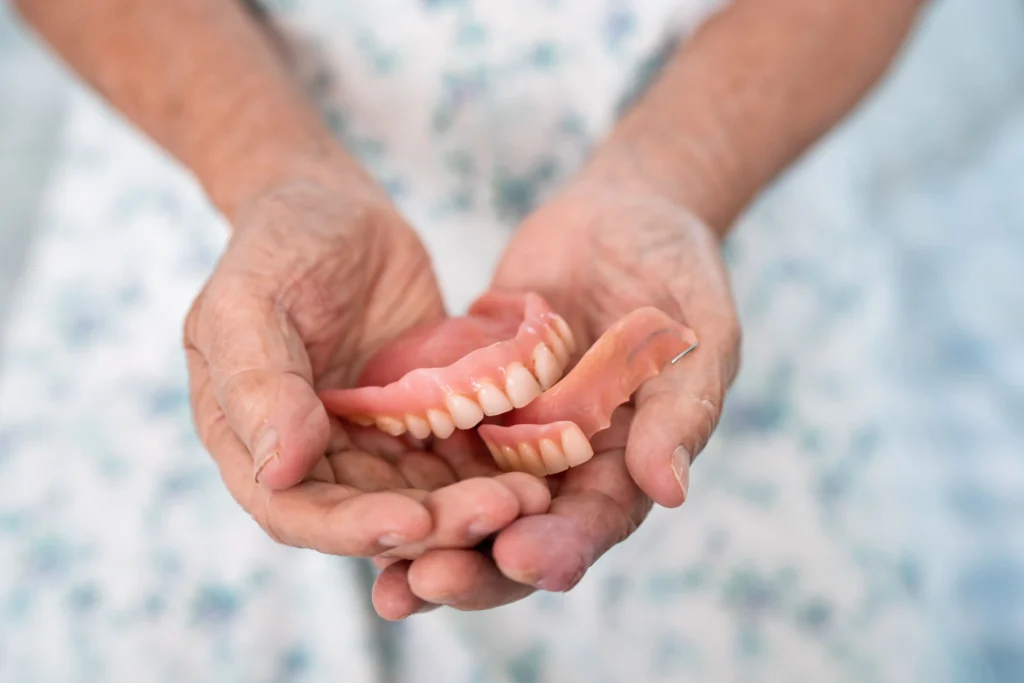
Losing teeth can affect the way you eat, speak, smile, and interact with others. That is why many people ask: “Dentures: what are their advantages and disadvantages?” The answer depends on your oral health, gums, bone structure, budget, and expectations.
A denture, also known as a removable dental prosthesis, can help you restore function, appearance, and confidence. Dentures replace missing teeth and can make eating and speaking easier than living without teeth.
What Is a Denture?
A denture is a removable dental prosthesis designed to replace missing teeth. It can replace some teeth or a full set of teeth, resting on the gums and, in some cases, being supported by natural teeth or dental implants for better stability.
Think of it as a custom-made structure that restores support to your mouth.
It is not only about appearance. It can also improve chewing, speech, and confidence when smiling.
Dentures: What Are Their Advantages and Disadvantages?
The main advantage of a denture is that it allows you to replace several teeth in a relatively quick, affordable way, often without surgery. Its main disadvantage is that, because it is removable, it may require adaptation, adjustments, and daily care to remain comfortable and stable.
In other words: it can be an excellent solution, but it must be properly recommended and well fitted.
Types of Dentures
Complete Denture
A complete denture replaces all the teeth in one arch: upper, lower, or both.
It is usually recommended when a person has lost all their natural teeth or when the remaining teeth cannot be preserved in a healthy way.
Partial Denture
A removable partial denture replaces some missing teeth.
It rests on the gums and, in many cases, on natural teeth through clasps or custom-designed structures.
Implant-Supported Overdenture
An implant-supported overdenture is a removable prosthesis that attaches to dental implants.
It usually offers more stability than a conventional denture, especially in the lower jaw.
Advantages of Dentures
1. They Restore Your Smile
A well-designed denture can restore facial volume and improve the appearance of your smile.
When teeth are missing, the lips and cheeks may look more sunken. A denture helps provide facial support.
2. They Improve Chewing
When teeth are missing, eating meats, fruits, vegetables, or firmer foods can become difficult.
A denture can help you chew better, although you will need an adjustment period at first.
3. They Help You Speak More Clearly
Teeth play an important role in pronouncing many words.
By replacing them, the tongue regains points of support, which can improve speech with practice.
4. They Are a More Affordable Option
In many cases, removable dentures have a lower initial cost than other alternatives such as dental implants.
This can make them a realistic option for older patients or people who need to replace several teeth.
5. They Do Not Always Require Surgery
A conventional denture does not require surgical placement.
This can be important if you have medical conditions, take certain medications, or prefer to avoid invasive procedures.
6. They Can Be Made Faster Than Other Treatments
While some implant treatments require several months, a removable prosthesis is often completed in fewer clinical stages.
The exact time depends on your mouth, gums, and whether you need previous extractions.
Do Dentures Hurt?
A denture should not hurt when it is properly fitted. It is normal to feel pressure or discomfort at first, but persistent pain, sores, or difficulty eating are signs that the prosthesis needs professional review and adjustment.
Do not try to file or modify it at home.
One small incorrect change can affect your entire bite.
Book a personalized dental evaluation
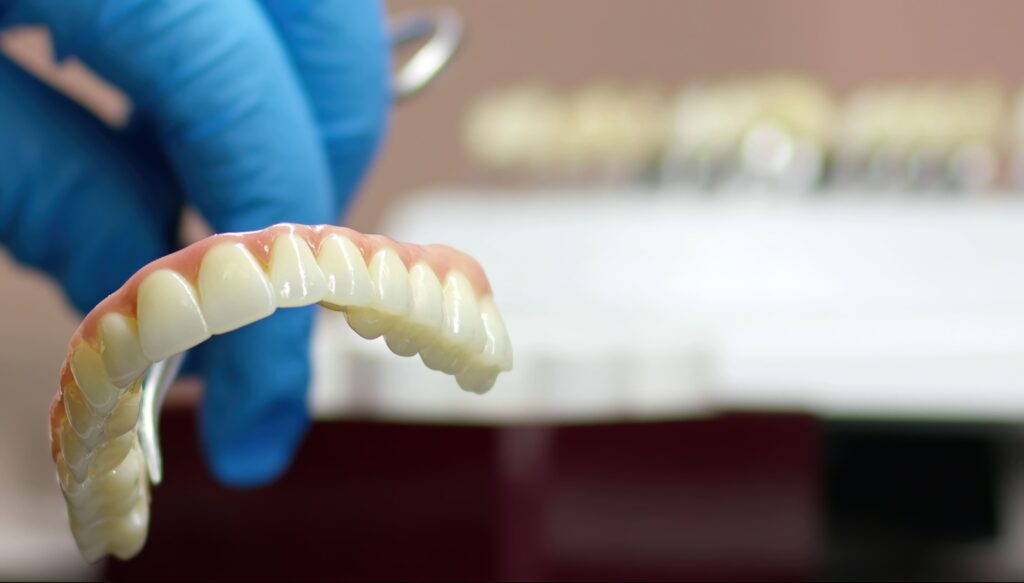
How Long Does It Take to Get Used to Dentures?
Getting used to dentures usually takes from a few days to several weeks. During this period, your mouth learns how to speak, chew, and control the prosthesis. Adjustments with your dentist are key to improving comfort and stability.
To adapt more easily:
- Start with soft foods.
- Chew slowly and on both sides.
- Read out loud to practice speaking.
- Attend your follow-up appointments.
- Do not use the denture if it causes severe sores.
How Do You Clean Dentures?
A denture is cleaned by removing it from the mouth, brushing it with a soft brush, and using products specifically designed for dentures. It is also important to clean your gums, tongue, cheeks, and any remaining natural teeth to protect your oral health.
Cleaning is not optional.
A dirty denture can contribute to bad breath, gum irritation, and infections such as denture stomatitis.
Basic Care Recommendations
- Remove it after eating and rinse it.
- Brush it daily.
- Do not use abrasive toothpaste.
- Clean your gums, tongue, and palate.
- Store it according to your dentist’s instructions.
- Do not sleep with it unless your dentist recommends it.
Denture, Bridge, or Implant: Which Option Is Right for You?
The best option depends on how many teeth you have lost, the amount of available bone, your general health, your budget, and whether you want a fixed or removable solution. A denture is often more affordable; an implant may offer greater stability; a bridge can be fixed but requires supporting teeth.
Implants are a fixed alternative to removable dentures and can support crowns, bridges, or dentures.
Quick Comparison
| Treatment | Is it removable? | Main advantage | Possible disadvantage |
|---|---|---|---|
| Denture | Yes | More affordable and replaces several teeth | May move or require adjustments |
| Dental bridge | No | Fixed and aesthetic | May require reshaping neighboring teeth |
| Dental implant | No or combined | Very stable and functional | Requires surgery and more time |
Who Is a Good Candidate for Dentures?
You may be a good candidate if you have lost several teeth, have difficulty chewing, notice changes in your smile, or are looking for a functional and aesthetic solution. A dental evaluation helps determine whether you need a complete denture, partial denture, or an option combined with implants.
For patients over 60, dental prostheses can be especially helpful when the goal is to restore quality of life without overly invasive treatments.
Even so, every mouth is different.
That is why diagnosis should include an evaluation of your gums, bone, bite, remaining teeth, and hygiene habits.
Signs That Your Current Denture Needs to Be Checked
Your denture should not be a constant source of discomfort.
Schedule a review if you notice:
- It moves when you speak.
- It causes sores.
- It makes noise when you chew.
- It falls out easily.
- You have persistent bad breath.
- You struggle to eat soft foods.
- It is broken, stained, or worn.
- You have been using it for more than 5 years.
Dental cleaning and gum check-up
What Happens If You Do Not Replace Missing Teeth?
Not replacing missing teeth can affect your bite, diet, and oral health. Neighboring teeth may shift, chewing can become uneven, and certain areas may collect more plaque because they are harder to clean.
Also, eating poorly due to missing teeth can affect your nutrition.
Your mouth does not work separately from the rest of your body.
Conclusion: Dentures: What Are Their Advantages and Disadvantages?
The answer to “Dentures: what are their advantages and disadvantages?” is simple: their advantages include restoring your smile, chewing, speech, and confidence in an accessible way; their disadvantages include adaptation, possible movement, adjustments, and daily hygiene.
The key is for your prosthesis to be personalized, comfortable, and reviewed by a dentist.
If you have lost teeth or your current denture no longer fits well, a professional evaluation can help you choose between a complete denture, partial denture, overdenture, bridge, or implants.
Your smile can feel secure again. The first step is finding out what your mouth needs today.
Frequently Asked Questions About Dentures
They should not hurt. It is normal to feel pressure or discomfort at first, but pain, sores, or ulcers mean the prosthesis needs adjustment. Do not modify it at home; visit your dentist to correct the fit.
The price depends on the type of prosthesis, the materials, whether it is complete or partial, and whether you need extractions, adjustments, or previous treatments. A personalized evaluation is the best way to receive a clear estimate adapted to your case.
The time varies depending on your mouth and the type of prosthesis. Several appointments may be needed to take impressions, test the bite, adjust the appearance, and deliver the final denture. If you need extractions or healing time, the process may take longer.
Yes, but you will need an adaptation period. At first, it is best to eat soft foods, cut food into small pieces, and chew slowly on both sides. With practice and proper adjustments, many people regain more comfortable eating.
It depends on your case. A denture is often more affordable and does not always require surgery. An implant offers greater stability but requires evaluation of bone, general health, time, and budget. A dental evaluation helps choose the safest option.

