
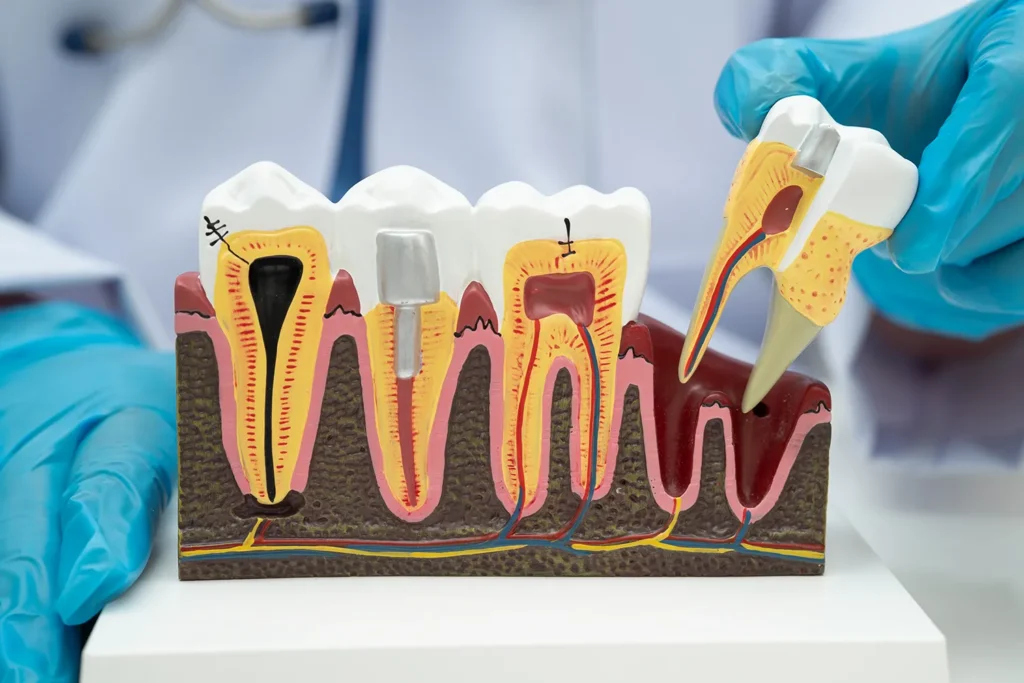
Peri-implantitis is one of the most important complications that can appear around a dental implant. Many people think that once they get an implant, they no longer need to worry as much about that area because “it is not a natural tooth.” However, a dental implant also needs proper hygiene, professional checkups, and healthy gums to remain stable in the long term.
When the gum around an implant becomes inflamed, bleeds, or begins to lose bone support, it may be a sign of peri-implant disease. Detecting it on time is key to preventing the problem from progressing and affecting the stability of the implant.
Peri-implantitis treatment depends on how advanced the disease is, the condition of the bone, the health of the gums, and each patient’s risk factors.
What Is Peri-Implantitis?
Peri-implantitis is an inflammatory disease that affects the tissues surrounding a dental implant. It can begin with gum inflammation around the implant and, if not controlled, progress until it causes bone loss around the implant.
In simple terms, peri-implantitis is similar to periodontitis, but it occurs around a dental implant instead of a natural tooth.
This condition is often related to bacterial buildup, dental plaque, poor oral hygiene, a history of periodontal disease, smoking, uncontrolled diabetes, or lack of professional maintenance.
That is why the management of peri-implantitis should not focus only on cleaning the affected area, but also on controlling the causes that led to the inflammation.
What Is the Difference Between Peri-Implant Mucositis and Peri-Implantitis?
Not every inflammation around an implant means the implant is lost. There are two important stages that should be differentiated.
Peri-Implant Mucositis
Peri-implant mucositis is inflammation of the gum around the implant, but without bone loss. It may cause redness, sensitivity, or bleeding when brushing.
When detected early, it can be reversible with professional cleaning, better at-home hygiene, and proper follow-up care.
Peri-Implantitis
Peri-implantitis is a more advanced stage. In addition to gum inflammation, there is already progressive bone loss around the implant.
In these cases, periodontal treatment for implants can be more complex and, depending on the case, may require surgical procedures to clean, decontaminate, and stabilize the area.
Warning Signs Around a Dental Implant
A person with dental implants should pay attention to any changes in the gum or in the way they feel when biting. Some warning signs include:
✅ Bleeding when brushing or using dental floss
✅ Red, swollen, or sensitive gum around the implant
✅ Persistent bad taste or bad breath
✅ Suppuration or pus discharge
✅ Pain or discomfort when biting
✅ Feeling that the implant is moving
✅ Gum recession or exposure of metal parts
✅ Changes in the way the bite feels
If you notice any of these symptoms, it is not advisable to wait. The earlier the implant is evaluated, the greater the chances of controlling the disease.
Looking for a solution for peri-implantitis in time can help preserve the implant and avoid more invasive treatments.
How Is Peri-Implantitis Diagnosed?
Diagnosis should not be made just by “looking” at the implant. To know whether peri-implantitis is present, a clinical and radiographic evaluation is needed.
The dentist may evaluate:
✅ Depth of the pockets around the implant
✅ Bleeding or pus when probing
✅ Gum level around the implant
✅ X-rays to evaluate bone loss
✅ Fit of the crown or prosthesis over the implant
✅ Hygiene and plaque buildup
✅ Risk factors such as bruxism, diabetes, smoking, or periodontal history
An X-ray is key because it allows the dentist to see whether bone loss has already occurred around the implant.
A proper diagnosis helps determine whether the patient needs deep cleaning, peri-implant therapy, plaque control, surgery, or a stricter maintenance plan.
Peri-Implantitis Treatment: What Options Are Available?
Peri-implantitis treatment depends on how advanced the disease is. Not all cases are managed the same way, which is why a personalized evaluation is important.
The main goal is to control the infection, reduce inflammation, decontaminate the implant surface, and prevent further bone loss.
1. Professional Cleaning and Plaque Control
In early stages, the first step is to remove bacterial plaque and tartar around the implant. The patient’s hygiene technique is also reviewed because at-home maintenance is an essential part of treatment.
The dentist may recommend interdental brushes, oral irrigators, special floss for implants, or instruments designed to clean around implant-supported prostheses.
This type of treatment for inflamed gum around an implant can help control the disease when there is still no advanced bone damage.
2. Decontamination of the Implant Surface
When bacteria adhere to the implant surface, professional decontamination may be necessary.
The goal of this peri-implant therapy is to reduce the bacterial load and create better conditions for the tissues to stabilize.
Depending on the case, specific instruments, antimicrobial solutions, local therapy, or complementary technologies may be used.
3. Control of Risk Factors
Treating peri-implantitis is not only about cleaning the implant. It is also necessary to control the factors that contributed to the problem.
Aspects that should be reviewed include:
✅ Daily oral hygiene
✅ Previous periodontal disease
✅ Diabetes
✅ Smoking
✅ Bruxism or teeth grinding/clenching
✅ Crown or prosthesis design
✅ Difficulty cleaning the area
✅ Frequency of dental maintenance appointments
If the patient cannot clean properly around the implant because the crown has a difficult shape, the problem may return even after treatment.
That is why control of peri-implant disease should include both clinical care and patient education.
4. Surgical Treatment in Advanced Cases
When significant bone loss has already occurred, surgical treatment may be necessary.
The goal is to gain better access to the implant surface, deeply clean the area, decontaminate the implant, and treat the bone defect if the case allows it.
In some patients, bone regeneration may be considered. In others, the focus may be to control the infection and modify the area to make future hygiene easier.
This type of treatment for dental implant infection must be carefully evaluated, since the prognosis depends on the level of bone loss, the stability of the implant, and the patient’s overall health.
5. Periodontal and Peri-Implant Maintenance
After treatment, follow-up is mandatory. Implants with a history of peri-implantitis require regular checkups to prevent relapse.
Maintenance may include professional cleanings, gum evaluation, follow-up X-rays, bite assessment, and reinforcement of at-home hygiene.
A good maintenance plan is an essential part of peri-implantitis treatment because it helps detect any changes before the problem progresses again.
Can an Implant With Peri-Implantitis Be Saved?
In many cases, yes, the disease can be controlled and the implant can be preserved, especially when it is detected early. However, if bone loss is advanced or the implant already has mobility, the prognosis may be more guarded.
Implant mobility is a serious sign. A healthy implant should be firm. If it moves, it is important to seek an evaluation as soon as possible.
That is why, if you notice bleeding, inflammation, pus, pain, or bad odor around a dental implant, the best step is to seek professional care.
How to Prevent Peri-Implantitis
Prevention begins before the implant is placed and continues throughout the life of the treatment.
To reduce the risk:
✅ Schedule regular dental cleanings
✅ Attend implant checkups even if you do not have pain
✅ Maintain careful daily oral hygiene
✅ Use the tools recommended to clean around the implant
✅ Control conditions such as diabetes
✅ Avoid smoking
✅ Treat bruxism if you clench or grind your teeth
✅ Seek care if you notice bleeding, inflammation, or bad odor
A dental implant can be an excellent solution to replace missing teeth, but its success depends on proper planning, correct placement, a well-designed prosthesis, and consistent maintenance.
When Should You Visit Dental One Panama?
If you have a dental implant and notice inflammation, bleeding, pain, bad odor, pus, or changes in the gum, the wisest step is to schedule an evaluation.
It is also advisable to have your implants checked even if you do not have symptoms, especially if months or years have passed since your last checkup.
At Dental One Panama, we provide comprehensive dental care for adults and children, including dental implants, periodontics, maxillofacial surgery, oral rehabilitation, hygiene, and prevention.
We are located at Town Center Costa del Este, Torre Bambú, 6th floor, office 616-A.
Schedule your appointment and check the condition of your dental implants before inflammation progresses.

