
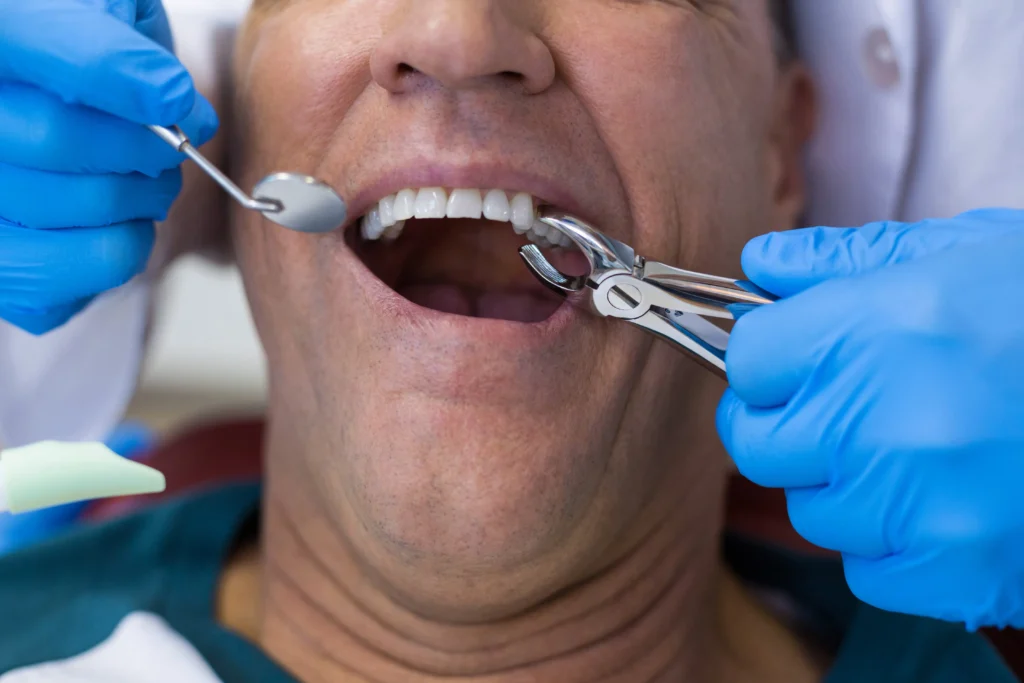
If you are wondering, “Can an infected molar be extracted? How is it done?”, the short answer is: yes, in many cases an infected molar can be extracted, but your dentist must first evaluate the level of infection, pain, swelling, your overall health, and whether the infection has spread.
An infected molar should never be ignored. Even if the pain comes and goes, the infection may still be active inside the tooth, in the gum, or in the surrounding bone.
The good news is that, with the right evaluation, your dentist can determine whether the best option is to save the molar or perform a safe tooth extraction.
Tabla de contenidos
What Is an Infected Molar?
An infected molar is a tooth where bacteria have entered the deeper areas of the tooth or the tissues around it. This may happen because of advanced decay, fractures, gum disease, impacted wisdom teeth, or dental problems that were not treated on time.
Think of your molar like a house with a broken door. When decay, a crack, or unhealthy gums create an opening, bacteria can enter, multiply, and cause inflammation, pus, and pain.
A dental infection may form an abscess, which is a pocket of pus caused by bacteria. This can lead to throbbing pain, swelling, sensitivity, bad taste, fever, or a small bump on the gum.
Can an Infected Molar Be Extracted? How Is It Done?
Yes, an infected molar can be extracted when the dentist determines that the tooth cannot be saved or that removing it is the safest way to control the infection. The procedure is performed with local anesthesia, a prior evaluation, and specific care depending on each case.
Not every infected molar needs to be removed immediately. First, the dentist checks whether there is a way to preserve it, such as root canal treatment or periodontal therapy.
However, if the molar is badly damaged, fractured, loose, has an advanced abscess, or can no longer function properly, infected molar extraction may be the best solution.
When Does an Infected Molar Need to Be Removed?
An infected molar may need to be extracted when the damage is too advanced to save the tooth.
This may happen in cases such as:
- Deep decay that has destroyed a large part of the molar.
- A tooth fracture that extends below the gumline.
- A persistent infection that does not improve with other treatments.
- A dental abscess associated with a poor-prognosis molar.
- An infected or impacted wisdom tooth.
- Bone loss caused by periodontal disease.
- Recurring pain in a molar that can no longer be restored.
The decision is not based on pain alone. It is made after a clinical evaluation, X-rays, and a careful review of the tooth’s condition.
Do You Always Need Antibiotics Before a Tooth Extraction?
You do not always need antibiotics before extracting an infected molar. In many cases, the most important treatment is removing the cause of the infection, whether through extraction, drainage, root canal treatment, or another procedure recommended by the dentist.
This point is important: antibiotics do not replace dental treatment.
It is like turning off an alarm without putting out the fire. Symptoms may improve for a while, but if the cause remains inside the molar, the problem can return.
Your dentist may prescribe antibiotics when there are signs of spreading infection, fever, significant swelling, general illness, or medical conditions that increase risk.
Never take antibiotics on your own. Taking them without professional guidance can lead to antibiotic resistance, side effects, and delays in proper treatment.
How Is an Infected Molar Extracted Step by Step?
An infected molar extraction is performed after a dental evaluation. The goal is to remove the affected tooth, control the infection, and support a safe recovery. Depending on the difficulty, it may be a simple extraction or a surgical extraction.
1. Clinical Evaluation
Your dentist checks:
- Where the pain is located.
- Whether there is swelling or pus.
- Whether you can open your mouth normally.
- The condition of the gum.
- Whether the molar is broken, loose, or severely damaged.
- Your medical history and medications.
The dentist will also ask how long you have had pain and whether you have had fever, facial swelling, or difficulty swallowing.
2. Dental X-Ray
An X-ray allows the dentist to see what cannot be seen with the naked eye.
It helps evaluate:
- The shape and position of the roots.
- The amount of bone around the molar.
- The presence of an abscess.
- Proximity to nerves or important structures.
- Whether the molar is impacted or trapped under the gum.
This step is especially important for wisdom teeth or more complex extractions.
Internal link suggestion: Link here to the oral and maxillofacial surgery or wisdom tooth extraction service page.
3. Pain Control With Anesthesia
Before starting, the dentist applies local anesthesia to numb the area.
You may feel pressure or movement, but you should not feel sharp pain during the extraction.
If there is significant swelling, the anesthesia may take a little longer to work or require additional techniques. That is why it is so important to have the procedure done by a trained dental professional.
4. Molar Extraction
If the molar is visible and easy to access, a simple extraction may be performed.
In this case, the dentist carefully loosens the tooth and removes it using specialized instruments.
If the molar is severely damaged, broken, impacted, or has complex roots, a surgical extraction may be needed.
5. Cleaning the Infected Area
After the molar is removed, the dentist cleans the area to remove infected debris or inflamed tissue when necessary.
In some cases, drainage may be performed if there is a collection of pus.
The goal is to leave the area in better condition so it can heal properly.
6. Stitches, If Needed
Not every extraction requires stitches.
If the extraction was surgical or the wound needs support, the dentist may place sutures to help close and protect the area.
7. Recovery Instructions
Before you leave, you will receive clear instructions about:
- How to control bleeding.
- What to eat.
- How to brush your teeth.
- What to avoid.
- Which medications to take, if prescribed.
- When to return for a follow-up visit.
Following these instructions is key to avoiding complications.
Does It Hurt to Extract an Infected Molar?
Extracting an infected molar should not hurt during the procedure because local anesthesia is used. You may feel pressure, movement, or vibration, but not intense pain. After the extraction, some soreness, mild swelling, or sensitivity during the first few days is normal.
Post-extraction discomfort is usually controlled with the medications and instructions provided by your dentist.
What you should not ignore:
- Pain that gets worse after several days.
- Strong bad odor.
- Pus.
- Fever.
- Bleeding that does not stop.
- Swelling that increases.
If any of these signs appear, contact the clinic.

What Should You Do After the Extraction?
After a tooth extraction, a blood clot forms in the socket where the molar used to be. That clot works like a “natural bandage” that protects the bone and helps the area heal.
During the first hours and days, it is important to protect that clot.
Recommended Care
- Bite down on the gauze for the time indicated.
- Avoid forceful spitting during the first few hours.
- Do not use a straw.
- Do not smoke.
- Eat soft, cool foods.
- Avoid very hot foods on the first day.
- Brush carefully without injuring the area.
- Take medications only as prescribed.
- Attend your follow-up appointment if one was scheduled.
What You Should Avoid
- Taking antibiotics without a prescription.
- Touching the wound with your fingers or tongue.
- Doing intense exercise the same day.
- Rinsing forcefully right away.
- Chewing hard foods on the extraction side.
- Smoking during recovery.
Post-operative care is just as important as the extraction itself.
What Happens If You Do Not Remove an Infected Molar?
If an infected molar is not treated, the infection can progress. Pain may increase, an abscess may form, the bone may be affected, the face may swell, or the infection may spread to other areas.
Even if the pain disappears for a while, that does not mean the infection has healed.
Sometimes, when the nerve dies, the pain decreases. But bacteria may still be active in the root or around the molar.
That is why waiting too long can turn a treatable problem into a dental emergency.
Can an Infected Molar Be Saved?
In some cases, yes, an infected molar can be saved. It depends on the amount of damage, the remaining healthy tooth structure, the bone support, the position of the molar, and the type of infection.
Options to try to preserve the molar may include:
- Root canal treatment.
- Dental restoration.
- Crown.
- Periodontal treatment.
- Abscess drainage.
- Infection control.
But if the molar no longer has a good prognosis, removing it may be the healthiest decision.
When Should You Schedule an Urgent Appointment?
You should schedule an urgent appointment if you have severe pain, facial swelling, pus, fever, difficulty opening your mouth, a constant bad taste, or a broken molar with pain.
Seek care as soon as possible if you have:
- Throbbing pain that does not improve.
- Swelling in the gum, cheek, or jaw.
- Fever or general discomfort.
- Pus or discharge.
- Difficulty swallowing or breathing.
- A loose or fractured molar.
- Persistent bad taste or bad odor.
- Pain when biting.
A dental infection should not be left “for later.”
Who May Need an Infected Molar Extraction?
This treatment may be recommended for patients who have a molar with an advanced infection or a tooth that cannot be restored.
It may apply especially to:
- People with deep cavities.
- Patients with broken molars.
- People with dental abscesses.
- Patients with infected wisdom teeth.
- People with advanced periodontal disease.
- Patients with recurring pain.
- People who have delayed dental care because of fear or lack of time.
If this sounds like your case, the priority is to evaluate the molar and control the infection safely.
Conclusion
So, can an infected molar be extracted? How is it done? In many cases, yes, but it should always be done after a professional evaluation.
Your dentist examines the molar, takes X-rays if needed, controls pain with anesthesia, removes the affected tooth, and cleans the area to support a safe recovery.
If you have pain, swelling, pus, bad taste, or a severely damaged molar, do not wait for the infection to progress.
Schedule a dental evaluation and receive guidance on whether your case requires molar extraction, root canal treatment, or another procedure to protect your oral health.
Frequently Asked Questions
Yes, in many cases an infected molar can be extracted the same day, as long as the dentist determines it is safe to do so. If there is severe swelling, fever, or risk of a spreading infection, the infection may need to be controlled first.
During the procedure, you should not feel sharp pain because local anesthesia is used. You may feel pressure or movement. After the extraction, it is normal to feel discomfort for a few days, which can usually be managed with your dentist’s instructions.
The cost depends on the complexity of the case. A simple extraction is different from a surgical extraction, an impacted wisdom tooth, or a case with advanced infection. An evaluation allows the dentist to confirm the cost and the right treatment plan.
Initial recovery usually takes several days, but complete healing of the area can take longer. Healing time depends on the difficulty of the extraction, the level of infection, your overall health, and how well you follow post-operative instructions.
Not always. Antibiotics are prescribed based on the type of infection, general symptoms, swelling, medical risk, and the dentist’s judgment. You should not self-medicate because antibiotics do not replace the extraction or the dental treatment needed.

