

Table of Contents
- What does a metallic taste in the mouth mean?
- Why do we get a metallic taste in the mouth?
- Dental causes of a metallic taste in the mouth
- What types of patients may experience a metallic taste?
- When can it be a sign of gingivitis or periodontitis?
- How can a dentist help?
- What can you do at home while scheduling your appointment?
- Conclusion
- Frequently Asked Questions
What Does a Metallic Taste in the Mouth Mean?
A metallic taste in the mouth is a change in your sense of taste that can make your mouth feel like it tastes like metal, blood, coins, or iron, even when you have not eaten anything with that flavor.
Think of it as your mouth sending you a warning signal. Sometimes it is related to something simple, such as poor oral hygiene or dry mouth. Other times, it may be connected to inflamed gums, infections, medications, hormonal changes, or periodontal disease.
If it happens once and goes away, it may not be serious. But if the metallic taste continues, appears with bleeding gums, or comes with bad breath, it is time to check your oral health.
Why Do We Get a Metallic Taste in the Mouth?
A metallic taste in the mouth can happen when something disrupts the normal balance of your saliva, gums, teeth, or taste buds. It may also be related to bacteria, inflammation, medications, pregnancy, infections, or dry mouth.
Your saliva works like a natural cleanser. It helps wash away food particles, neutralize acids, and keep the environment in your mouth balanced.
When there is bacterial plaque, tartar buildup, swollen gums, or not enough saliva, that balance is disrupted. As a result, you may start to notice unusual tastes: metallic, bitter, acidic, or unpleasant.
Dental Causes of a Metallic Taste in the Mouth
A metallic taste does not always come from your teeth, but your mouth is often the first place to look for the cause.
1. Poor Oral Hygiene
When food particles and bacterial plaque are not removed properly, bacteria can build up on your teeth, gums, and tongue.
This buildup may cause:
- A bad taste in the mouth
- Bad breath
- Sensitive gums
- Bleeding when brushing
- A feeling that your mouth is still dirty even after brushing
A professional dental cleaning helps remove plaque and tartar that your toothbrush cannot fully eliminate.
2. Gingivitis
Gingivitis is the early stage of gum disease. It usually appears when bacterial plaque builds up along the gumline, where the tooth and gum meet.
You can think of it as constant irritation: your gums become inflamed because they are reacting to bacteria that have been sitting there for too long.
Common symptoms include:
- Red or swollen gums
- Bleeding when brushing
- Gum sensitivity
- Bad breath
- Bad taste or metallic taste
The good news is that when gingivitis is detected early, it can often be controlled with a dental cleaning, better oral hygiene, and professional follow-up.
3. Periodontitis
Periodontitis is a more advanced form of gum disease. It does not only affect the visible part of your gums; it can also damage the tissues that support your teeth.
In simple terms: if gingivitis is an early warning, periodontitis means the problem has moved deeper.
It can cause:
- Swollen or receding gums
- Frequent bleeding
- Persistent bad breath
- Unpleasant or metallic taste
- Loose teeth
- Bone loss around the teeth
When periodontitis is present, “brushing better” is usually not enough. A periodontal evaluation is needed to understand how advanced the problem is.
4. Bleeding Gums
Sometimes the metallic taste is similar to the taste of blood. This can happen when your gums bleed, even in small amounts.
It may occur when brushing, flossing, or biting into hard foods.
If you notice blood frequently, do not ignore it. Healthy gums should not bleed regularly.
5. Dental Infections or Abscesses
A dental infection can change the taste in your mouth, especially if there is pus, swelling, or a strong odor.
In these cases, a metallic taste may appear together with:
- Tooth pain
- Swelling in the gum or face
- Sensitivity when biting
- Fever
- Strong bad breath
- Discharge or pus
If you have these symptoms, you should schedule a dental evaluation as soon as possible.
What Types of Patients May Experience a Metallic Taste?
A metallic taste can affect different types of patients. It does not always mean there is a serious condition, but it is important to notice how long it lasts and what other symptoms appear with it.
People With Tartar Buildup
If you have not had a dental cleaning in several months, you may have tartar buildup.
Tartar traps bacteria and can irritate your gums, causing a bad taste, bad breath, or bleeding.
Patients With Inflamed Gums
If your gums are red, sensitive, or bleeding, the metallic taste may be related to gingivitis or periodontitis.
Smokers
Tobacco can alter your sense of taste, dry out your mouth, and increase the risk of gum problems.
People Taking Certain Medications
Some medications can change the taste of your saliva or cause dry mouth.
If you suspect a medication may be contributing to the problem, do not stop taking it on your own. Speak with your physician first.
Pregnant Women
During pregnancy, changes in taste and increased gum sensitivity can occur.
There may also be a higher risk of gum inflammation, which is why dental checkups are important during this stage.
Patients With Dry Mouth or Acid Reflux
Dry mouth and acid reflux can change the taste in your mouth, especially when you wake up or after eating.
Metallic Taste in the Mouth: When Can It Be a Dental Sign?
A metallic taste in the mouth can be a dental warning sign when it appears along with swollen gums, bleeding, bad breath, visible tartar, pain, sensitivity, or loose teeth.
Pay close attention if you also notice:
- Blood when brushing
- Red or swollen gums
- Bad breath that does not improve
- Pain when chewing
- Loose teeth
- Gums that appear lower than before
- Tartar buildup near the gumline
- A constant bad taste
These symptoms may mean you need a professional dental cleaning or a periodontal evaluation.
When Can It Be a Sign of Gingivitis or Periodontitis?
A metallic taste may be a sign of gingivitis or periodontitis when it appears together with bleeding, gum inflammation, persistent bad breath, or sensitivity when brushing. In these cases, the issue may be related to bacterial plaque and gum disease.
The main difference is how deep the damage goes:
Gingivitis
- Mainly affects the gums.
- Can cause bleeding and inflammation.
- Is often reversible when treated early.
Periodontitis
- Affects the gums, bone, and supporting structures of the teeth.
- Can cause bone loss.
- Requires periodontal treatment and professional maintenance.
If you are not sure which one you have, the right step is to get evaluated. Your dentist can examine your gums, measure periodontal pocket depth, and take X-rays if needed.
How Can a Dentist Help?
Treatment depends on the cause. That is why the first step is not guessing — it is evaluation.
1. Complete Dental Examination
Your dentist will check your teeth, gums, tongue, restorations, oral hygiene, and signs of inflammation.
They may also ask about medications, pregnancy, medical conditions, habits, and how long you have had the metallic taste.
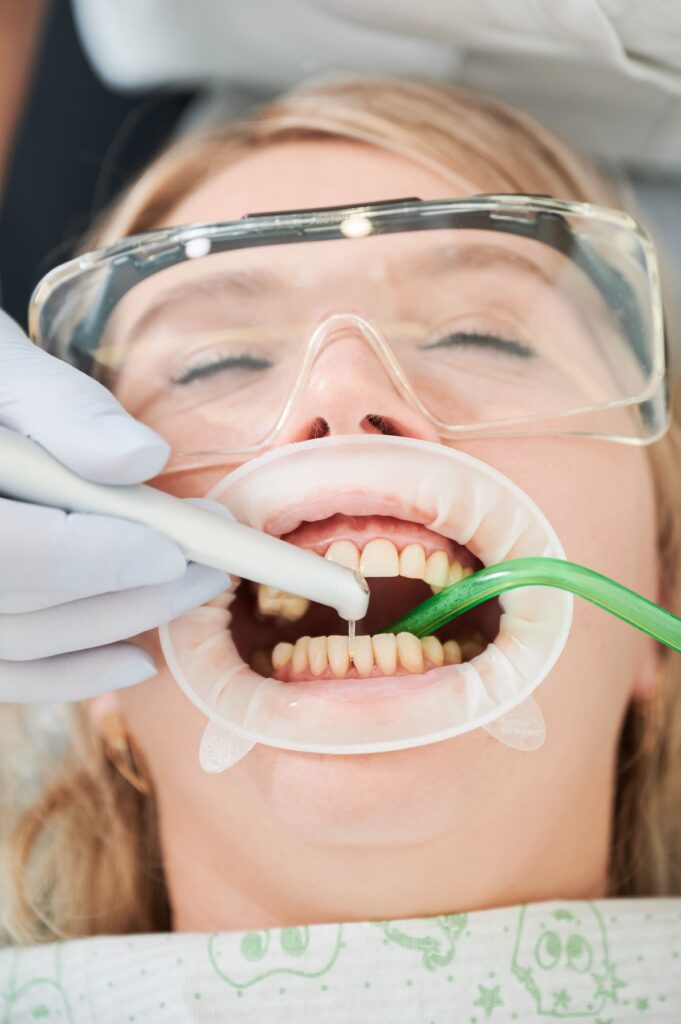
2. Professional Dental Cleaning
If the problem is related to plaque or tartar, a dental cleaning can help restore gum health.
During the cleaning, deposits that do not come off with regular brushing are removed.
This can improve:
- Bad taste
- Bad breath
- Inflammation
- Bleeding
- The feeling of an unclean mouth
3. Gingivitis Treatment
If you have gingivitis, treatment usually focuses on controlling bacterial plaque, improving oral hygiene, and performing professional cleanings.
The goal is to stop inflammation before it progresses into periodontitis.
4. Periodontal Treatment
If there are signs of periodontitis, a deeper cleaning may be needed, known as scaling and root planing, along with regular follow-up visits.
This treatment is designed to clean below the gumline and reduce inflammation in the supporting tissues.
5. Maintenance Plan
After treatment, follow-up care is essential.
Maintenance may include:
- Regular cleanings
- Gum evaluations
- X-rays when needed
- Personalized hygiene instructions
- Plaque and tartar control
What Can You Do at Home While Scheduling Your Appointment?
These steps may help, but they do not replace a professional evaluation if the metallic taste continues.
Basic Care
- Brush your teeth at least twice a day.
- Floss daily.
- Gently clean your tongue.
- Drink enough water.
- Avoid smoking.
- Reduce very acidic or irritating drinks.
- Do not ignore bleeding gums.
What You Should Not Do
- Do not take antibiotics without professional guidance.
- Do not stop medications without speaking with your physician.
- Do not cover the problem only with strong mouthwashes.
- Do not wait months if there is bleeding, pus, or pain.
The goal is not to “hide” the metallic taste. The goal is to find the cause.
Do you notice a strange taste in your mouth?
When Should You Schedule an Appointment?
Schedule a dental evaluation if the metallic taste lasts several days, keeps coming back, or appears with other symptoms.
You should especially seek care if you have:
- Bleeding gums
- Tooth pain
- Persistent bad breath
- Visible tartar
- Swelling
- Loose teeth
- Pus or discharge
- Constant dry mouth
The earlier the problem is detected, the easier it often is to treat.
Conclusion
A metallic taste in the mouth can have many causes, but when it appears with bleeding, swollen gums, bad breath, or tartar buildup, it is a sign that deserves dental attention.
In many cases, a professional dental cleaning and gum evaluation can help identify the source of the problem and prevent complications such as gingivitis or periodontitis.
If you have a constant metallic taste, do not ignore it. Your mouth may be telling you that it needs professional care.
Schedule your evaluation at Dental One Panama and check the health of your gums before a small problem becomes more serious.
Not always. Sometimes it may be related to dry mouth, medications, pregnancy, or poor oral hygiene. However, if it lasts several days or appears with bleeding, bad breath, pain, or swollen gums, you should schedule a dental evaluation.
Yes. Gingivitis can cause swollen gums, bleeding, and a bad taste in the mouth. If the metallic taste appears when you brush or floss, it may be related to bleeding gums or bacterial plaque buildup.
It can help if the cause is related to plaque, tartar, bad breath, or gum inflammation. A dental cleaning removes bacterial deposits that do not always come off with daily brushing.
The cost depends on the cause. If you only need a dental cleaning, treatment is usually simpler. If there is periodontitis, infection, or a need for X-rays, the treatment plan may vary after the evaluation.
You should be concerned if the metallic taste does not go away, gets worse, or appears with bleeding, pain, pus, swelling, loose teeth, or constant bad breath. In these cases, it is better not to wait and to see a dentist.
Content reviewed by our medical team

Dr. Francisco
Sousa-Lennox
Orthodontics and Dento-Facial Orthopedics
Medical record number:1243
Dr. Francisco Sousa Lennox: Specialist in Orthodontics and Dentofacial Orthopedics. Certified in Invisalign since 2006 (Invisalign Top Doctor), with experience in interceptive orthodontics and orthodontic treatments for children, adolescents, and adults; also in the care of patients with temporomandibular disorders (graduate of the Roth Williams Center for Functional Occlusion).

